
Bangor Professor works with Bear Grylls
A Âé¶čAV Professor provided his expertise for the opening episode of adventurer Bear Grylls’ new three-part TV series, Britain’s Biggest Adventures with Bear Grylls.
Professor Simon Webster from the School of Biological Sciences runs a well-established group focussing on the study of crustacean endocrinology at the University and he featured in the first episode where Bear visited north Wales, and the glorious mountains of Snowdonia.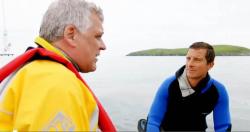
Travelling to the west of the epic mountains of Snowdonia, Bear started his adventure in a fast rib crossing Cardigan Bay, which at 50-miles wide is the largest bay in Wales. Its coastal rocks once being attached to what is now North America, torn apart some 65-million years ago as the Atlantic Ocean was formed. Today it’s home to a truly unique marine habitat, from seals and dolphins to turtles and sharks.
Bear is there to free dive, a dangerous and sometimes deadly sport, where he plunged 52-feet down to the seabed in search of a strange and exotic predator known as the mantis shrimp.
Before he began his dive, Professor Webster had a warning for Bear:
“Be careful when you’re handling the mantis shrimp because it can flip its tail around and cut you. And it also has these quite amazing claws, these shoot out at the speed of a 2:2 bullet.
“The mantis shrimp is remarkable at adapting to its surroundings, it has amazing raptorial claws and they have tremendously complicated eyes, which are arguably the most advanced in the invertebrates. They have up to 12 visual pigments compared to our three, and can see polarized and ultra violet light, and unlike us they can move each eye independently.†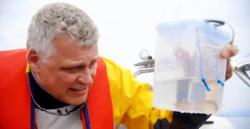
After his second attempt scouring the seabed, Bear finally spotted one of the mantis shrimps, commenting: “It’s quite exotic looking.â€
Watch the episode again on
Publication date: 16 September 2015